
Your Gravel Driveway Experts — Built to Last in Eastman's Red Clay
If your driveway has potholes, ruts, or standing water after rain — or you need a new one built from raw land — we bring proper base preparation, honest estimates, and reliable follow-through. Crusher run base, crown grading, and quality surface gravel installed right the first time.
Get Free QuoteHow much does gravel driveway installation cost in Eastman, Dodge County?
Gravel driveway installation in Eastman, Dodge County typically runs $8–$18 per linear foot for a standard 12-foot-wide driveway. Dodge County's red clay subsoil requires a compacted crusher run base layer — skipping it leads to rapid failure. Surface gravel is #57 crushed stone applied over the base. Most Eastman-area driveways are 300–600 feet, putting total project cost between $2,500 and $10,000 depending on length and site conditions.
6 Services for Driveways That Last —
Not Just Driveways That Look Fine Until the First Storm
From new installations on raw land to full restoration of a washed-out rural driveway — each with proper base preparation for middle Georgia's red clay conditions.
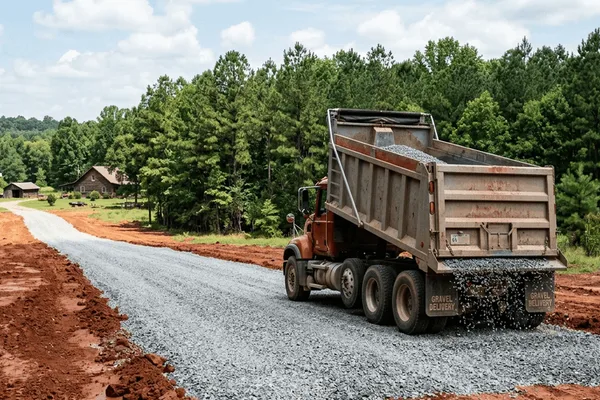
Gravel Driveway Installation
New gravel driveway installation in Eastman, GA and throughout Dodge County — 4–6 inch compacted crusher run base layer, surface gravel, and proper drainage grading to prevent washout in middle Georgia's red clay soil.
Learn More →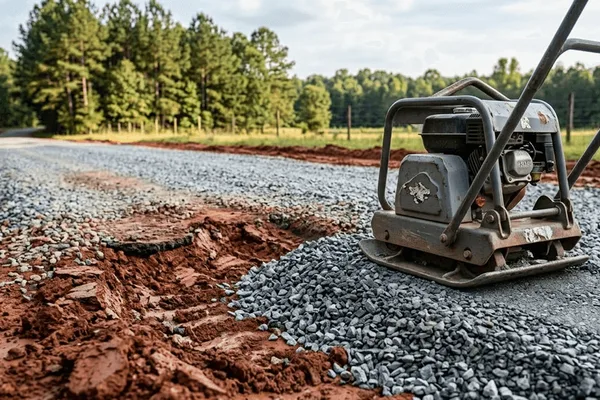
Gravel Driveway Repair
Gravel driveway repair in Eastman, GA — pothole filling, rut repair, and washout restoration that addresses base failure, not just covers the surface, so the repair lasts through Georgia's heavy rain season.
Learn More →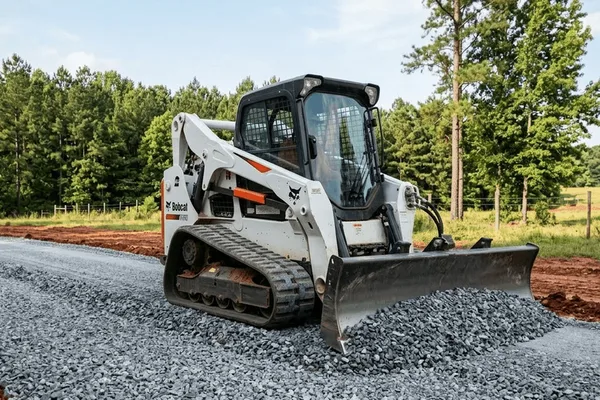
Driveway Grading
Driveway grading and leveling to restore proper crown grade and drainage — critical for any Eastman GA gravel driveway that has flattened over time and begun holding standing water after storms.
Learn More →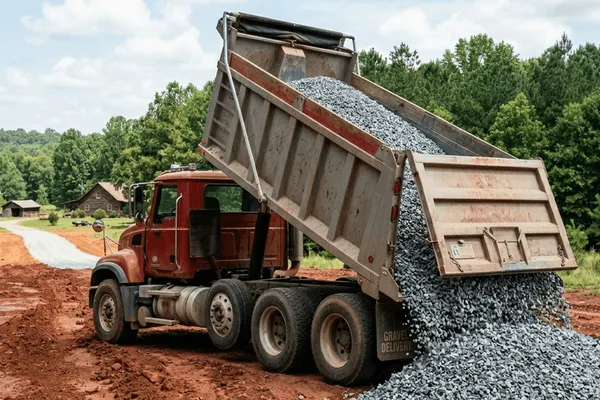
Gravel Delivery & Spreading
Crusher run, #57 crushed stone, or pea gravel delivered and spread on your Dodge County property — sized to the job, no overordering. One contractor from delivery to finished grade.
Learn More →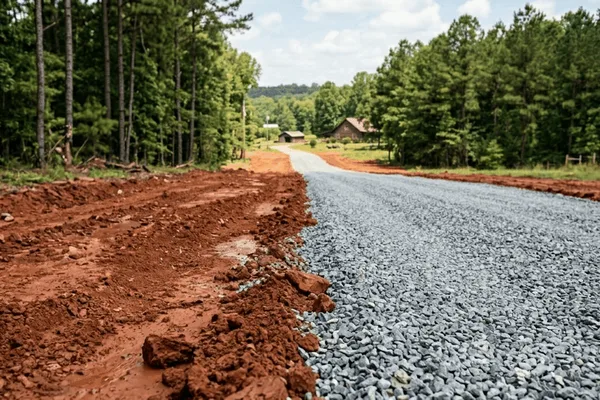
Driveway Restoration
Full gravel driveway restoration for Dodge County properties that have lost most of their surface material — new base work and fresh surface gravel applied to spec for rural driveways that are down to bare clay.
Learn More →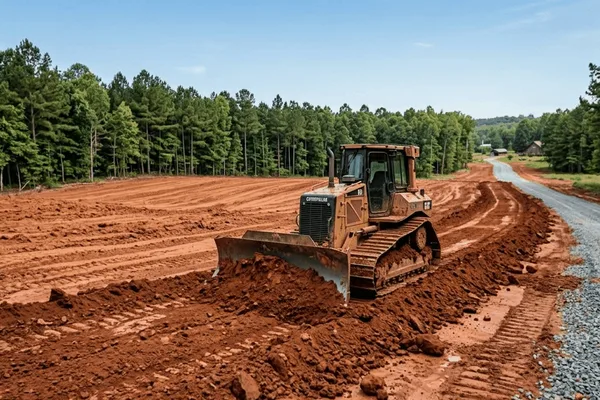
Land Grading
Site grading for new driveway access routes on raw Dodge County land — cutting access where no driveway exists, establishing grade, and preparing the subbase before gravel installation begins.
Learn More →The Local Team That Builds
Driveways That Actually Last
Free Property Assessments
Driveway length, base condition, access, and grade all affect what a job actually costs. We assess every property before quoting — no phone-quoted guesses that fall apart when the crew shows up.
Crusher Run Base Included
Proper driveways start with a compacted crusher run base — not surface gravel dropped on soft clay. That's what creates ruts and potholes after the first storm. We include it on every job.
Built for Long Rural Driveways
Rural driveways commonly run 300–800 feet. Local contractors with the right equipment, material volumes, and process handle those long runs — not the short suburban jobs most contractors prefer.
Crown Grading on Every Job
Every installation and repair includes proper crown grading to move water off the surface and away from your foundation. In this region's heavy rain climate, drainage isn't optional — it's what separates a driveway that lasts from one that washes out.
Gravel Driveway Installation
in Eastman & Middle Georgia
Red Clay Soil Changes Everything
The red clay subsoil here holds moisture and softens under load. Without a properly compacted crusher run base, any driveway develops ruts within a season as surface gravel sinks into the clay. Base preparation is the single most important step we do — and one many contractors skip.
Every Job Starts with a Site Assessment
Driveway length, length, existing base condition, access grade, and drainage patterns all affect how we price and approach a job. A 400-foot driveway with intact base costs very differently than one where the clay has heaved through. We assess before we quote — every time.
A Real Driveway vs. a Gravel Dump
A proper installation means base compaction, surface gravel matched to use, and crown grading for drainage. A contractor who shows up with a dump truck and drops stone on soft ground has not built a driveway — they've created a one-season fix that washes out with the next storm.
Signs Your Driveway Needs Professional Attention
- Potholes and ruts that refill with water after every rain
- Gravel has washed to the edges or into the yard, leaving a bare dirt track
- Standing water on the driveway surface after storms
- Soft spots where vehicles are leaving deep tire impressions
- New property access needed where no driveway currently exists
- Driveway has not been regraded or topped up in 3 or more years
- Base failure visible — gravel sinking into soft clay underneath
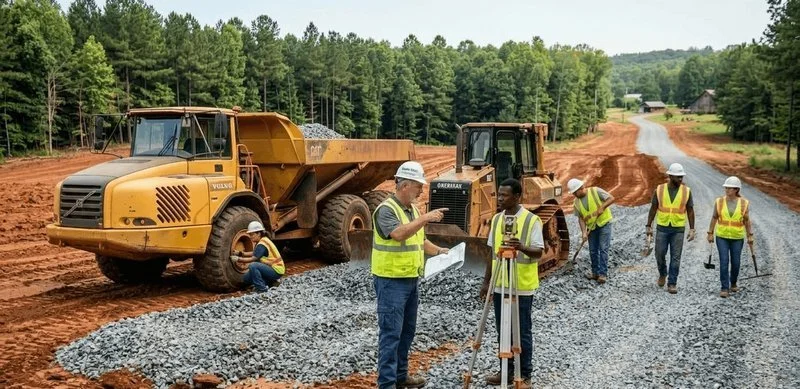
Communities We Serve Across
the Middle Georgia Area
Eastman Gravel installs and repairs gravel driveways throughout Dodge County, Georgia. Not sure if we cover your area? Submit a quote request and we'll confirm.
Gravel Driveway Questions
Answered for Property Owners Here
How much does a gravel driveway cost?
A gravel driveway in Eastman, GA typically costs between $8 and $18 per linear foot for a standard residential installation, with full projects ranging from $2,000 to $8,000 or more depending on driveway length, base condition, and gravel type selected. Rural driveways in middle Georgia commonly run 300–800 feet, so total project cost is best framed by length rather than square footage. Pothole and rut repairs start around $200–$800 depending on scope, while full driveway restoration runs $1,000–$4,000 for most Dodge County properties.
How deep should a gravel driveway be?
In Dodge County, Georgia, a properly built gravel driveway should have a compacted base layer of crusher run at 4–6 inches depth, topped with 2–3 inches of surface gravel such as #57 crushed stone. Middle Georgia's red clay soil can shift and compress under load, making adequate base depth especially important for any Eastman GA gravel driveway that carries heavy vehicles. Skipping the base layer and laying surface gravel directly on clay is one of the most common causes of driveway failure in this region.
What is the best gravel for a driveway?
In Dodge County, Georgia, crusher run is the preferred base material because it compacts firmly in red clay soil conditions — the stone dust binds the aggregate into a stable layer that resists shifting. For the surface layer, #57 crushed stone (clean granite or limestone) provides good drainage and a clean appearance. Avoid round pea gravel as a surface material on driveways with any slope — it rolls under tires and migrates to the edges.
How do you fix potholes in a gravel driveway?
In Dodge County, Georgia, properly fixing potholes in a gravel driveway requires more than just filling the hole with surface gravel. The soft or displaced base material beneath the hole must be removed and the area re-compacted before adding new gravel, otherwise the pothole returns within a few rain cycles. Georgia's heavy summer storms accelerate pothole formation, particularly on driveways where the crown grade has flattened and water is pooling rather than draining to the sides.
Is a gravel driveway cheaper than concrete?
In Dodge County, Georgia, a gravel driveway is significantly less expensive than concrete — typically 3 to 5 times cheaper per linear foot for a comparable rural driveway. Concrete driveways in this region cost $8–$18 per square foot installed, while an Eastman GA gravel driveway with proper base runs $8–$18 per linear foot for a standard 12-foot-wide driveway. For a 400-foot rural driveway, gravel is almost always the practical choice, and it handles heavy equipment loads that would crack a residential concrete surface.
How do you stop gravel driveway erosion?
In Dodge County, Georgia, gravel driveway erosion is primarily controlled through proper crown grading — maintaining a slight hump down the center so water sheds to both sides rather than running the length of the driveway. Middle Georgia's heavy rainfall events can wash significant gravel in a single storm if the crown has flattened. Additional measures include properly cut side ditches or drainage swales, strategic use of culverts at low crossings, and annual top-dressing to replace stone that has been displaced.
Who installs gravel driveways near me?
Eastman Gravel installs and repairs every gravel driveway in Eastman, GA and throughout Dodge County, serving all surrounding communities including Chauncey, Chester, Rhine, Milan, and Empire. We handle new gravel driveway installation, pothole and washout repair, driveway regrading, gravel delivery and spreading, and full driveway restoration. Submit a free quote request through our contact form and we will assess your driveway and provide an estimate.
How does a gravel driveway hold up in a Dodge County winter?
In Dodge County, Georgia, winters are mild, so the main seasonal concern for a gravel driveway is heavy rain and occasional freeze-thaw cycles rather than snow. A well-graded driveway with a proper crusher run base and maintained crown sheds winter rainfall to the sides and handles occasional freeze-thaw swings with minimal damage, compared to a surface-only gravel job that was never built with a compacted base.
How long does a gravel driveway last?
In Dodge County, Georgia, a properly installed gravel driveway with a compacted crusher run base and adequate drainage can last indefinitely with routine maintenance. The surface gravel will need top-dressing every 2–3 years depending on traffic and rainfall, and regrading should be done whenever the crown has flattened enough to allow water to pool. A Dodge County gravel driveway originally built without a proper base layer tends to deteriorate faster in middle Georgia's red clay conditions and may need base repair before resurfacing.
What is crusher run and is it good for driveways?
In Dodge County, Georgia, crusher run is a processed gravel material made from crushed stone mixed with stone dust — the fine dust acts as a binding agent that causes the aggregate to compact into a firm, stable surface. It is the preferred base material for gravel driveways in middle Georgia because it resists displacement in red clay soil better than round stone. Crusher run is typically used as the 4–6 inch base layer, with #57 stone or similar clean aggregate applied on top as the finished surface.
How do you fix ruts in a gravel driveway?
In Dodge County, Georgia, ruts in a gravel driveway are typically caused by vehicle weight pressing into a soft or inadequate base layer, especially in areas with red clay subsoil that holds moisture. Fixing ruts properly requires grading out the rutted area, adding and compacting new base material if the subbase has softened, and resurfacing with matched gravel. Simply adding surface stone to a rutted driveway without addressing the base will result in the same ruts returning within one heavy-rain season.
How wide should a gravel driveway be?
In Dodge County, Georgia, a standard single-lane residential gravel driveway should be 10–12 feet wide to allow comfortable vehicle passage without driving on the ungraded edges. Driveways that serve farm equipment, delivery trucks, or two-way traffic should be 14–16 feet wide. Rural property access roads requiring large agricultural equipment are often 16–20 feet wide — a gravel driveway width we handle for Eastman and Dodge County property owners.
What size gravel is best for a driveway?
In Dodge County, Georgia, #57 crushed stone — typically 3/4 inch to 1 inch clean crushed granite or limestone — is the most common surface gravel for residential driveways because it provides good traction, drains well, and stays in place under normal vehicle traffic. For the base layer, crusher run (which includes fine stone dust for binding) is preferred over clean #57 stone. Oversized stone (2 inches or larger) is generally avoided for residential surfaces because it is uncomfortable to walk on and can damage vehicle tires over time.
Does a gravel driveway need a base layer?
In Dodge County, Georgia, a base layer is essential for any gravel driveway that needs to hold up under regular vehicle traffic. Middle Georgia's red clay subsoil absorbs water and softens under load — without a compacted crusher run base layer, surface gravel sinks into the clay and the driveway develops ruts and soft spots after the first significant rainfall. A proper base of 4–6 inches of compacted crusher run is the single most important factor in gravel driveway longevity in Eastman, GA and the surrounding region.
What are the pros and cons of a gravel driveway?
In Dodge County, Georgia, the main advantages of a gravel driveway are cost (significantly less expensive than concrete or asphalt), drainage (gravel sheds water better than impervious surfaces), and practicality for long rural driveways where paved surfaces are cost-prohibitive. The primary drawbacks are the need for periodic top-dressing and regrading every few years, and gravel migration to the edges on driveways with any significant slope. For most property owners, a gravel driveway in Eastman or anywhere in Dodge County remains the most cost-effective and functional choice for runs over 150 feet.
How do you keep gravel from washing away on a driveway?
In Dodge County, Georgia, keeping gravel from washing away requires proper crown grading so water runs off the sides rather than channeling down the center, adequate side ditches to carry that runoff away from the driveway surface, and choosing the right gravel size — #57 stone and crusher run resist washing better than fine or round gravel. On steep driveways, water bars (low-profile drainage channels cut across the drive at intervals) redirect water before it can build enough volume and velocity to displace gravel.
How often does a gravel driveway need to be regraded?
In Dodge County, Georgia, most residential gravel driveways should be regraded every 1–3 years depending on traffic volume and rainfall. Middle Georgia's heavy summer rain events are the primary driver of crown flattening and surface erosion — a driveway that looks fine in spring can develop significant drainage problems by fall after a summer of storms. Driveways with high daily traffic or heavier vehicles (trucks, tractors, delivery vehicles) may need regrading annually.
Can you install a gravel driveway on a slope?
In Dodge County, Georgia, gravel driveways can be installed on slopes up to about 12–15 degrees with appropriate drainage measures. On steeper grades, water bars cut across the driveway at intervals redirect runoff before it builds velocity, and crusher run compacts more firmly on slopes than round stone. For very steep grades (over 15 degrees), additional base compaction and possibly geotextile fabric underlayment helps prevent the base from shifting downslope in wet conditions.
How much gravel do I need for a driveway?
In Dodge County, Georgia, a standard 12-foot-wide gravel driveway needs roughly 1 ton of gravel per 50 linear feet for a 2-inch surface application — so a 400-foot driveway requires approximately 8 tons for resurfacing. For a new Eastman GA gravel driveway installation with a 5-inch crusher run base plus 3-inch surface layer, double that estimate. Rural driveways in middle Georgia commonly run 300–800 feet, so it is important to measure the actual length before ordering — we assess this during the free property quote.
What is the difference between #57 stone and crusher run?
In Dodge County, Georgia, #57 stone is clean crushed granite or limestone — typically 3/4 to 1 inch angular pieces with no fine material — that provides good drainage and a neat surface appearance but does not compact into a rigid layer. Crusher run includes the same crushed stone mixed with stone dust (fines) produced during crushing — the dust fills the voids and binds the aggregate when compacted, creating a stable, load-bearing surface. For gravel driveways, crusher run is used as the base layer and #57 stone is used as the finished surface.
How long does gravel driveway installation take?
In Dodge County, Georgia, most gravel driveway installations are completed in 1–3 days depending on driveway length, base condition, and site accessibility. A standard Eastman GA gravel driveway of 200–400 feet on relatively level ground with no existing base issues can often be graded, based, and surfaced in a single day. Longer rural driveways of 500–800 feet, or projects that require significant site grading or tree root removal before base work can begin, typically take 2–3 days to complete properly.
What is the best gravel for red clay soil in Georgia?
In Dodge County, Georgia, crusher run is the best base material for any gravel driveway built on red clay soil because the stone dust content binds with the clay and compacts into a firm, load-bearing layer that resists sinking and displacement. Clean round stone or pea gravel should be avoided as a base on red clay — the smooth surfaces do not interlock and the stone migrates into the soft clay under vehicle weight. For the surface layer of an Eastman GA gravel driveway, #57 crushed stone provides good drainage and stays in place on top of a properly compacted crusher run base.
Do I need to clear land before installing a gravel driveway?
In Dodge County, Georgia, any trees, brush, stumps, or heavy vegetation in the driveway path must be cleared and removed before gravel installation can begin — building a driveway over uncleared ground results in base failure as organic material decomposes and settles unevenly beneath the gravel. For properties with significant clearing needs, Eastman Land Clearing handles site clearing and forestry mulching throughout Dodge County. Once the path is cleared and graded to proper drainage slope, base compaction and gravel installation can proceed.
Get a Free Driveway Quote No Obligation, No Pressure
Connecting Dodge County property owners with a local gravel driveway contractor — not a national company routing jobs from out of state. Describe your project and we'll be in touch.
Quote Request Received!
Thank you. We'll review your project details and follow up with pricing and availability.
Gravel Driveway Service — Eastman, GA and All of Dodge County
Proudly serving the City of Eastman and all communities across Dodge County, GA — Chauncey, Chester, Rhine, Milan, Empire, and surrounding rural properties.